

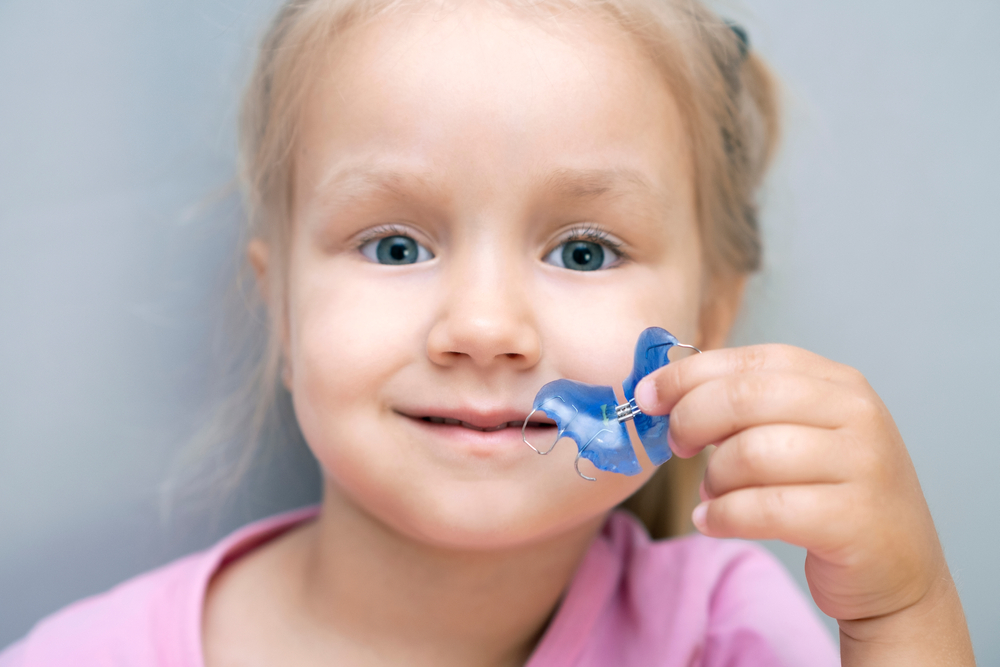
If your child has crowded teeth, an uneven bite, or a jaw that seems to be developing unevenly, you may wonder whether it is too early to see an orthodontist. In many cases, an early evaluation can provide useful answers even when treatment is not needed right away.
At River Mountain Orthodontics in Dunlap, Dr. Raymond McLagan evaluates how a child’s teeth, bite, and jaws are developing. His approach to orthodontic care focuses on identifying problems at the right time and recommending treatment only when it can provide a meaningful benefit.
The goal of early orthodontic treatment in Dunlap is not to put every young child in braces. It is to recognize developing orthodontic problems early and determine the best time to address them.
What Is Early Orthodontic Treatment?
Early orthodontic treatment, sometimes called Phase 1 orthodontic treatment, occurs while a child still has a mixture of baby and permanent teeth.
At this stage, an orthodontist considers more than just whether the teeth appear straight. The evaluation may include:
- How the upper and lower jaws fit together
- Whether permanent teeth have enough room to erupt
- Crowding or unusual spacing
- Crossbites, underbites, and other bite problems
- Early or delayed loss of baby teeth
- Oral habits such as prolonged thumb-sucking
- Facial and jaw development
Some children benefit from treatment while they are still growing. Others simply need periodic observation until more permanent teeth come in.
That distinction is important: an early orthodontic evaluation does not automatically mean early orthodontic treatment.
When Should My Child First See an Orthodontist?
The American Association of Orthodontists recommends that children receive their first orthodontic evaluation by around age seven.
At this age, many children have a combination of baby and permanent teeth. That gives an orthodontist an opportunity to see how the adult teeth are erupting and how the jaws and bite are developing.
For many seven-year-olds, the best recommendation is simply to keep watching their growth. When a problem would benefit from earlier intervention, however, identifying it during childhood may give the orthodontist more options.
Parents may want to schedule an evaluation if they notice:
- Significant crowding
- An underbite or crossbite
- Upper front teeth that protrude noticeably
- A jaw that shifts when the child bites down
- Early or late loss of baby teeth
- Difficulty biting or chewing normally
- Teeth that do not meet properly
- Long-term thumb-sucking or similar oral habits
- Permanent teeth that appear to be erupting in unusual positions
If you are unsure whether something is normal, an evaluation can help determine whether treatment, monitoring, or no action is appropriate.
What Problems Can Early Orthodontic Treatment Address?
Early orthodontic treatment is most useful when there is a specific problem that can be addressed during growth.
Depending on your child’s needs, pediatric orthodontic care may help address issues such as:
- Crowding: Limited space can make it difficult for permanent teeth to erupt into appropriate positions.
- Crossbites: Upper teeth may bite inside the lower teeth instead of outside them.
- Underbites: The lower jaw or lower teeth sit in front of the upper teeth when biting.
- Jaw growth concerns: In certain cases, treatment during growth can help guide the development of jaw relationships.
- Prolonged oral habits: Thumb-sucking and similar habits may affect the position of the teeth or the development of the palate.
- Early loss of baby teeth: Losing a baby tooth prematurely can sometimes allow neighboring teeth to shift into the space needed by a permanent tooth.
- Protruding front teeth: Certain tooth positions may leave the front teeth more vulnerable to injury.
The exact recommendation depends on the type of problem, the child’s stage of growth, and how the permanent teeth are developing.
What Is Phase 1 Orthodontic Treatment?
Phase 1 treatment is orthodontic care that begins before all of a child’s permanent teeth have erupted.
Depending on the problem being addressed, Phase 1 treatment may involve:
- A palate expander
- Partial braces
- Space-maintaining or space-guiding appliances
- Other orthodontic appliances designed for a growing mouth
After Phase 1, there is often a period of observation while additional permanent teeth erupt.
Some children later benefit from a second phase of treatment during adolescence. Other children may not need two phases at all. Dr. McLagan evaluates each child individually and recommends the treatment option that fits their stage of development and orthodontic needs.
What Are the Benefits of Treating Certain Problems Early?
When early treatment is appropriate, timing can allow an orthodontist to work with a child’s natural growth and dental development.
Depending on the diagnosis, early treatment may help:
- Create or preserve room for developing permanent teeth
- Correct certain crossbites or underbites
- Address harmful bite patterns before they become more established
- Guide developing jaw relationships in appropriate cases
- Reduce the risk of injury to significantly protruding front teeth
- Address orthodontic effects of prolonged thumb-sucking
- Make later orthodontic treatment more straightforward in some cases
However, early treatment is not necessary for every orthodontic problem. Starting treatment sooner is not automatically better. The right timing depends on the condition being treated and your child’s stage of development.
Does Every 7-Year-Old Need Braces?
No.
An orthodontic evaluation around age seven is primarily an opportunity to identify developing concerns. Many children do not need braces or another orthodontic appliance at that age.
If Dr. McLagan determines that treatment would be more effective later, your child may simply be monitored as the jaws grow and permanent teeth erupt.
This can be reassuring for parents. The purpose of an early visit is to understand what is happening and establish the right timing, not to begin treatment unnecessarily.
What Happens at an Early Orthodontic Evaluation?
Your child’s first orthodontic evaluation is designed to give you a clearer picture of their dental development.
Dr. McLagan can assess the alignment of the teeth, how the bite comes together, eruption of permanent teeth, and the relationship between the upper and lower jaws. Diagnostic records or imaging may be recommended when they are useful for evaluating development and planning care.
Parents should leave the visit with clear answers to questions such as:
- Is my child’s development progressing normally?
- Is there an orthodontic problem we should monitor?
- Would treatment now provide an advantage?
- If we wait, when should my child be evaluated again?
- What treatment may be appropriate in the future?
River Mountain Orthodontics emphasizes clear explanations so families understand why treatment is being recommended and what to expect next.
A Child-Friendly Approach to Orthodontics
An orthodontic office can feel unfamiliar to a child, especially during a first visit. A calm, supportive team can make that experience much easier.
Dr. McLagan works alongside the River Mountain Orthodontics team to help young patients understand what is happening and feel more comfortable during their appointments.
Clear communication matters for parents too. Families should understand not only what treatment is being recommended, but also why it is recommended, what alternatives may exist, and what happens if treatment is delayed.
Early Orthodontic Treatment FAQs
At what age should my child see an orthodontist?
The American Association of Orthodontists recommends an orthodontic evaluation by age seven. This does not mean every child needs treatment at seven. It gives the orthodontist an opportunity to evaluate growth, tooth eruption, and bite development at a useful stage.
What is the difference between an orthodontic evaluation and early treatment?
An evaluation determines whether an orthodontic problem exists and whether anything needs to be done about it. Early treatment begins only when the orthodontist believes addressing a specific issue during childhood offers an advantage.
Will my child need braces after Phase 1 treatment?
Possibly, but not necessarily. Some children benefit from a second phase of treatment once most permanent teeth have erupted, while others may follow a different treatment plan. Dr. McLagan will explain what is expected based on your child’s development.
How long does early orthodontic treatment take?
There is no single treatment length that applies to every child. Timing depends on the problem being corrected, the appliance used, and how your child grows and responds to treatment.
Are orthodontic appliances painful for children?
Children may notice pressure or temporary soreness when an appliance is placed or adjusted, but most become accustomed to it. The team explains what your child can expect and how to manage normal adjustment discomfort.
What happens if my child does not need treatment yet?
In many cases, the orthodontist will recommend monitoring growth and tooth eruption. Your child can return at appropriate intervals so treatment can begin at the stage when it is most beneficial, if treatment becomes necessary.
Parents with additional questions about appointments, braces, retainers, or treatment can find more information in River Mountain Orthodontics’ orthodontic FAQs and patient education resources.
Early Orthodontic Care for Dunlap Families
River Mountain Orthodontics provides care at multiple locations, including its Dunlap office. That gives families in the area access to orthodontic evaluations and ongoing care without having to travel far for every appointment.
Families who need another office option can also review River Mountain Orthodontics’ locations when planning treatment.
Schedule an Early Orthodontic Evaluation in Dunlap
If you have questions about your child’s teeth, bite, or jaw development, you do not have to wait until all of the permanent teeth have arrived to get answers.
Dr. Raymond McLagan and the River Mountain Orthodontics team can evaluate your child’s development and tell you whether treatment is recommended now, later, or not at all.
Take the next step toward understanding your child’s orthodontic needs and schedule an evaluation with River Mountain Orthodontics in Dunlap.